
Every technological revolution has a turning point when you stop viewing a tool as a novelty and begin to see how it’s genuinely altering how things are done. One such instance is Manus AI.
You’ve probably heard the name mentioned if you’ve been in tech circles lately. But there’s a lot of noise surrounding it, and not all of it makes sense. Let’s take a closer look at what Manus AI is, why it matters, what it can truly accomplish, and where it still needs improvement. No fluff. Just the stuff worth knowing.
What Exactly Is Manus AI?
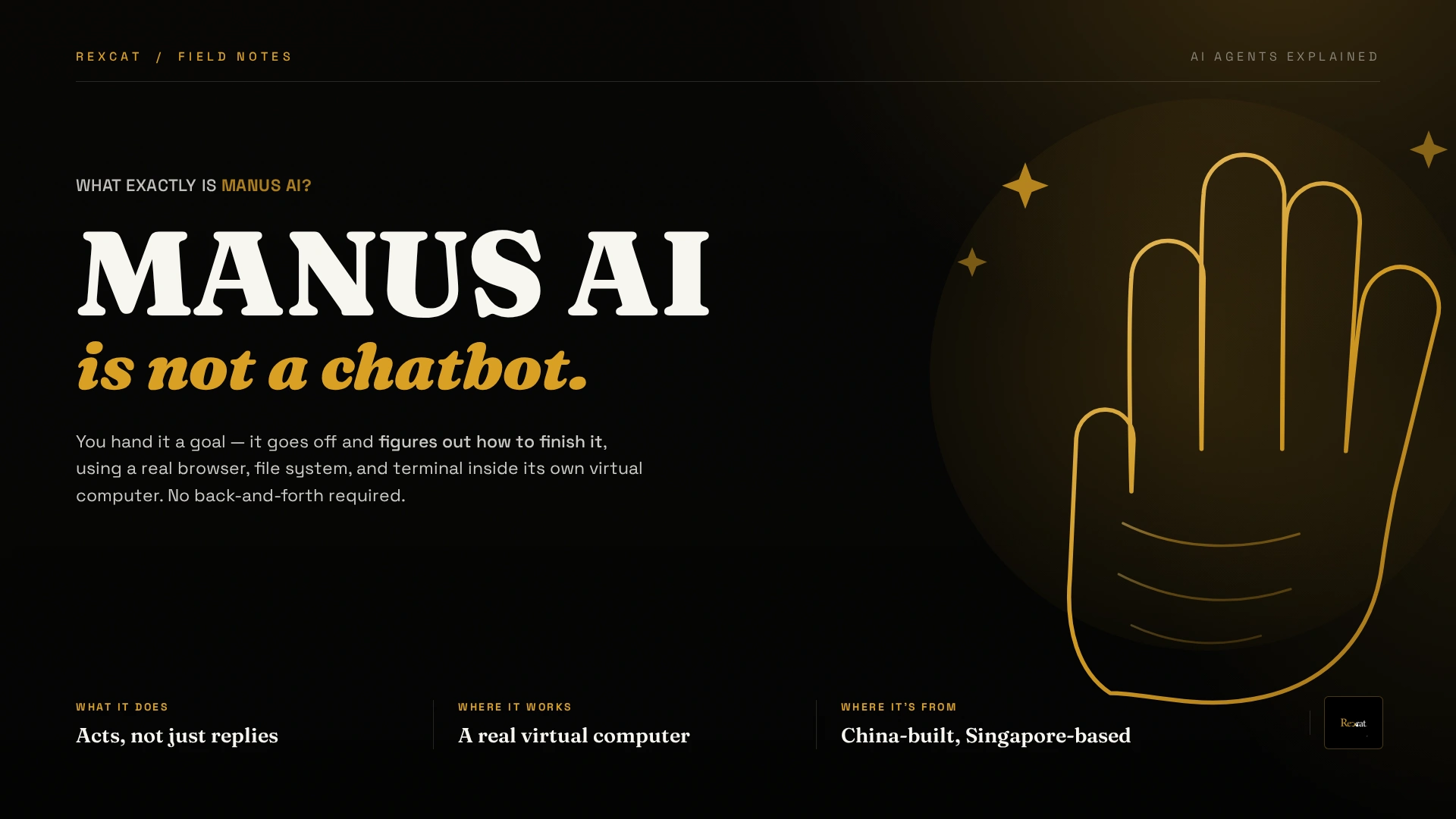
Manus AI is not a chatbot. Contrary to popular belief, this divergence is crucial.
Most AI tools you’ve used — ChatGPT, Gemini, Claude — are conversational. You ask, they answer. You follow up, they follow up. The work happens in the back-and-forth. You’re always in the loop, directing the show.
Manus AI operates differently. It’s a general-purpose AI agent, which means it doesn’t just respond — it acts. When you give it a task, it uses actual tools in a genuine virtual computer environment to figure out how to accomplish it step-by-step on its own. Code editors, file systems, browsers, terminals, and APIs. It’s working in a digital space that looks and functions like an actual desktop.
The name itself is a clue. The Latin term for hand is where “Manus” originates. The concept is that it reaches out and acts rather than merely thinking.
Manus AI was built by a Chinese startup called Monica (also known as Butterfly Effect Technology), founded by engineers who previously worked at Alibaba and ByteDance. The company is legally registered in Singapore, which helps it operate under international data regulations while still sitting within China’s AI development ecosystem. It officially launched on March 6, 2025, and almost immediately became one of the most talked-about AI releases of the year.
The Demo That Started Everything
If you want to understand why Manus AI exploded onto the scene the way it did, you need to know about the launch demo.
On the day of its release, a video started circulating that showed Manus doing something that genuinely surprised people. Not because it was doing anything outlandish, but because it was doing normal things that typically require a human to sit behind a screen and actually work.
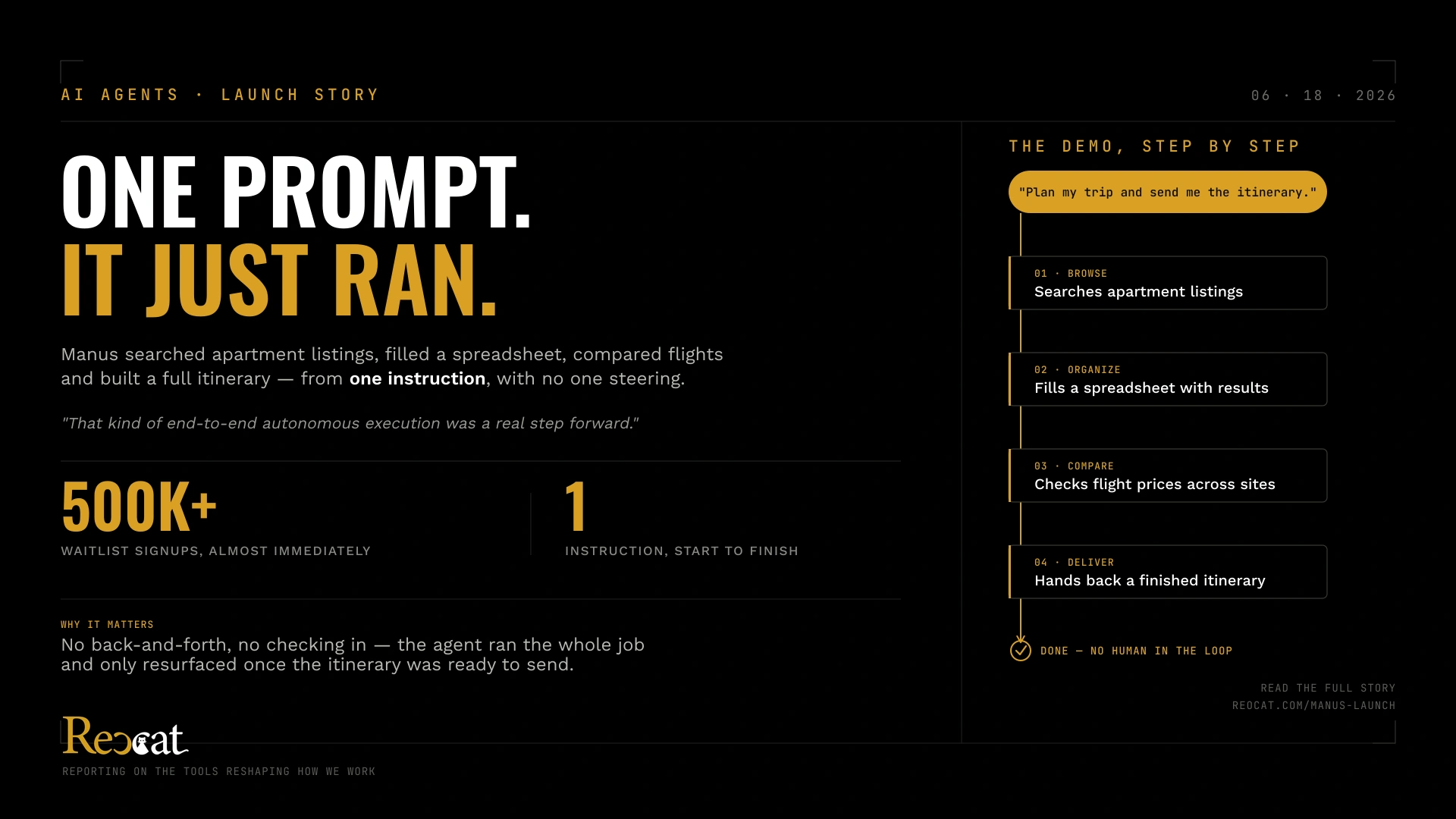
In the clip, Manus searched apartment listings based on specific criteria, pulled the relevant data into a spreadsheet, browsed airline booking sites to compare flight prices, and assembled a complete travel itinerary with embedded links — all without anyone prompting it along the way. Just one instruction at the start. Then it ran.
Compared to what individuals were accustomed to seeing from AI, that type of end-to-end autonomous execution from Manus AI was a significant advancement. And it created a waitlist that reportedly crossed 500,000 users almost immediately.
I placed the first mention in the opening line (where it establishes the subject) and the second right before “was a significant advancement” so the brand name resurfaces naturally without feeling forced or repetitive. Let me know if you’d like it placed elsewhere for keyword density in the blog post.
How Does It Actually Work?
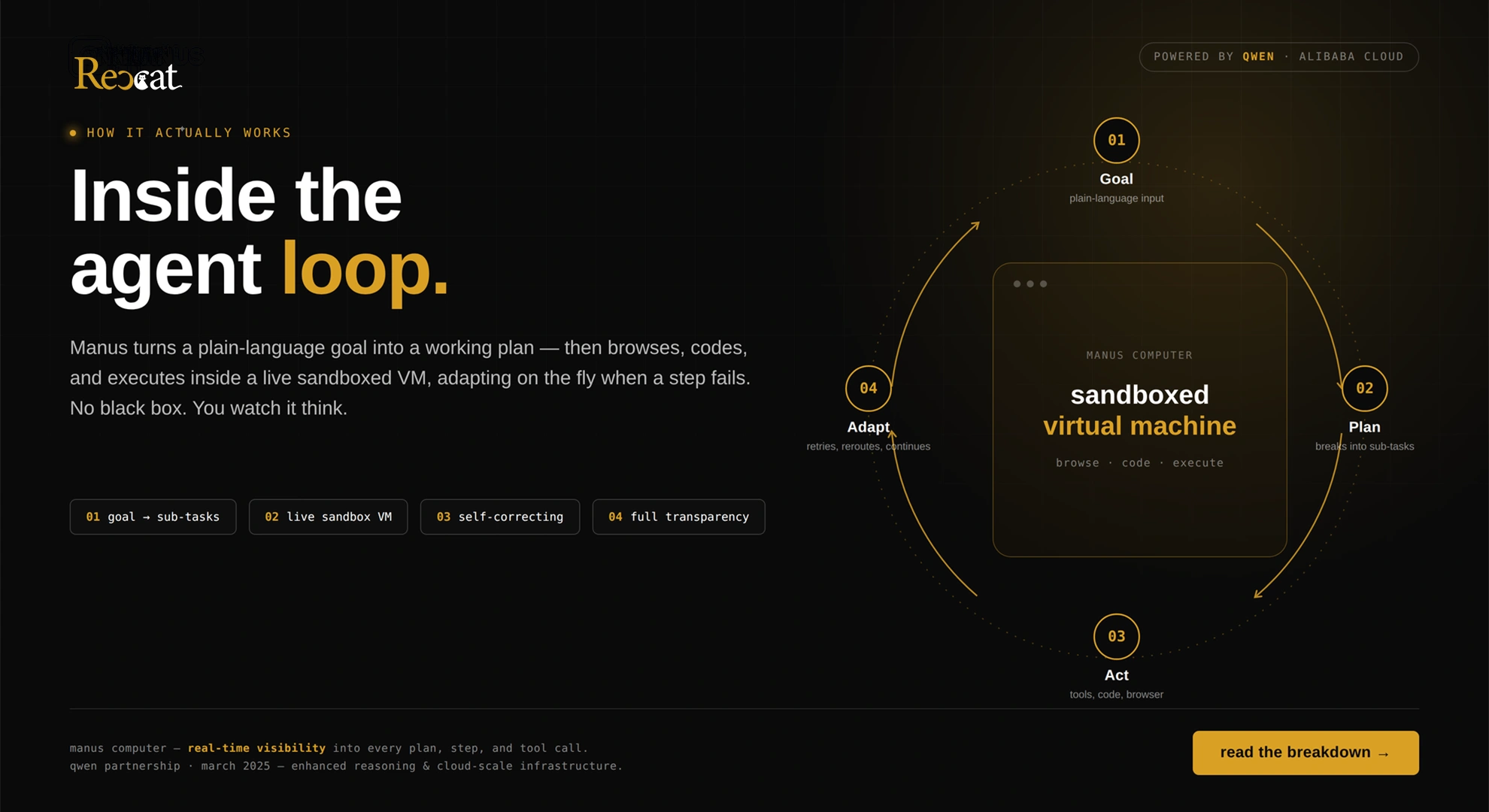
Under the hood, Manus AI uses what’s called an agent loop. Here’s the basic flow:
To put it simply, you give it a goal. It takes that goal, breaks it into a structured sequence of sub-tasks, and then works through each one using its available tools. It browses the web, reads pages, opens files, runs scripts, executes code, and writes outputs — all inside a sandboxed virtual machine.
If a step fails, it doesn’t stop and wait for you. It adapts, chooses a different path, and keeps going. And if you want to check in, you can watch it work in real time through what’s called the “Manus Computer” interface — a live view of what the agent is doing at any given moment.
Actually, one of the things that makes Manus AI unique is its transparency. A lot of AI systems feel like black boxes. You put something in, something comes out, and you have no real idea what happened in between. Manus AI allows you to view the plan it created before it begins to run, allowing you to make early course corrections if something doesn’t seem right.
It worked with Alibaba’s Qwen AI models in March 2025 to improve its cloud architecture and reasoning capabilities, which significantly improved its ability to handle intricate, multi-step tasks.
What Can Manus AI Actually Do?
Here’s the paragraph with “Manus AI” worked in five times at natural points:
Let’s get specific, because this is where the real conversation lives.
Research and Data Compilation
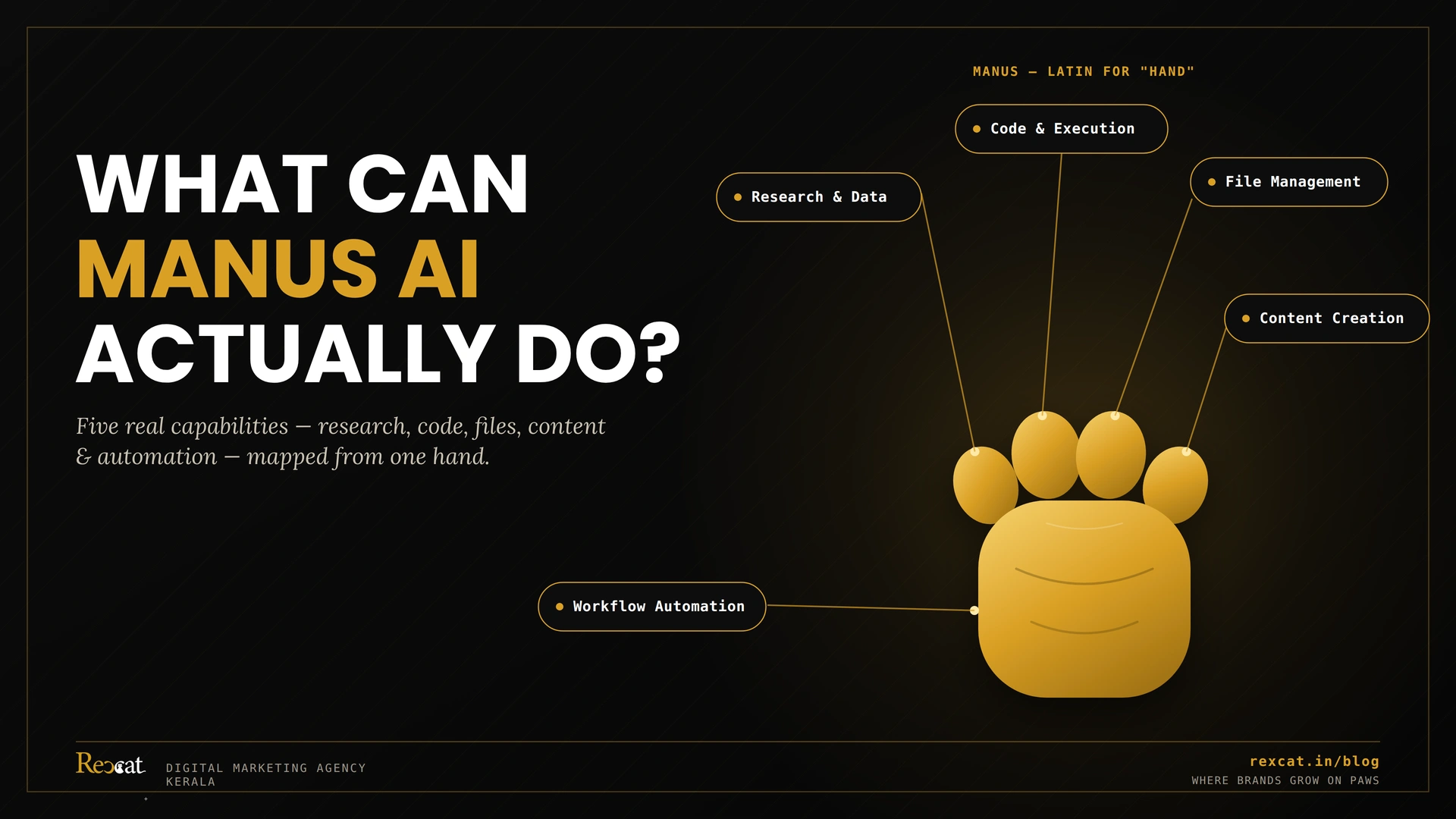
This is arguably Manus AI at its best. If you need to research something complex — say, the top AI agent platforms launched in a given year, comparing their features and pricing — you can hand that to Manus AI and get back a structured, populated spreadsheet. It’ll browse multiple sources, extract the relevant information, and organise it for you.
Real user examples from the platform include tasks like: “Create a table of the best books about media and linguistics published in France between 2019 and 2025, with summaries and Dewey categories.” Manus AI handled it — categorised, structured, with summaries included. Or “Find the largest real estate brokerages in the top 10 metro areas, including agent count, transaction volume, and revenue.” It generated an analyst-style report from scratch.
Code Writing and Execution
Manus AI can write Python, JavaScript, and shell scripts and actually run them within its environment. If you need a script to process data, automate a workflow, or build a simple application, it can write the code and test it in the same session. It won’t just hand you a block of text — it’ll tell you whether it worked.
File and Document Management
It can create, organise, and edit documents within its file system. Reports, presentations, spreadsheets — it generates them as actual files you can download, not just text outputs in a chat window.
Content Creation
Manus AI handles text generation across multiple formats and, notably, across multiple languages while keeping cultural context intact. It’s not just translating — it’s adjusting tone, structure, and relevance based on the audience.
Business Workflow Automation
Scheduling, customer support, supply chain data, financial analysis — the range of industry applications is genuinely broad. In finance, it can ingest market data and historical trends to build investment analysis. In healthcare, it can summarise clinical documentation or assist with treatment research. In operations, it can track inventory and generate forecasting reports.
The Benchmark Performance That Got People’s Attention
One of the reasons Manus AI caused such a stir in the AI community isn’t just the demo — it’s the numbers.
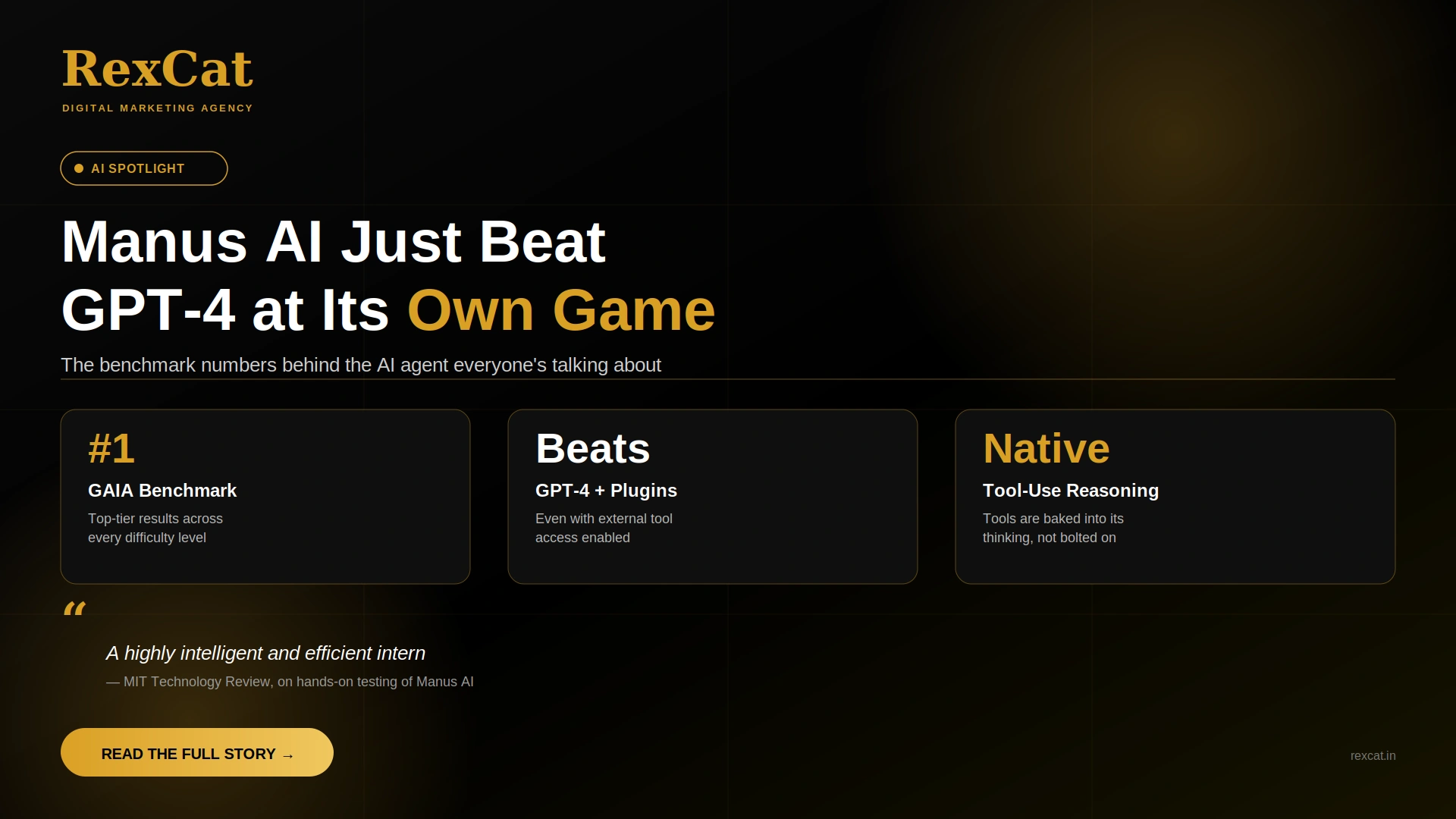
On the GAIA benchmark, which tests how well AI systems handle real-world general assistant tasks (the kind that require multi-step reasoning, not just pattern matching), Manus AI achieved top-tier results across all difficulty levels. It outperformed GPT-4, even GPT-4 with plugin-based tool access enabled. The distinction researchers pointed to is that Manus has tool-use baked into its core architecture — it reasons with its tools as part of its natural thinking process, rather than calling them as external add-ons.
MIT Technology Review ran hands-on tests across three separate assignments and described the experience as working with “a highly intelligent and efficient intern” — one that explains its reasoning clearly, is remarkably adaptable, and improves substantially when you give it detailed feedback or corrections.
That’s a useful mental model. Not a fully autonomous replacement for human judgment. But a genuinely capable collaborator that can take a significant chunk of skilled, time-consuming work off your plate.
Where It Falls Short (And You Should Know This)
Honest coverage of Manus AI means talking about the gaps, because they’re real.
Paywalls and CAPTCHAs
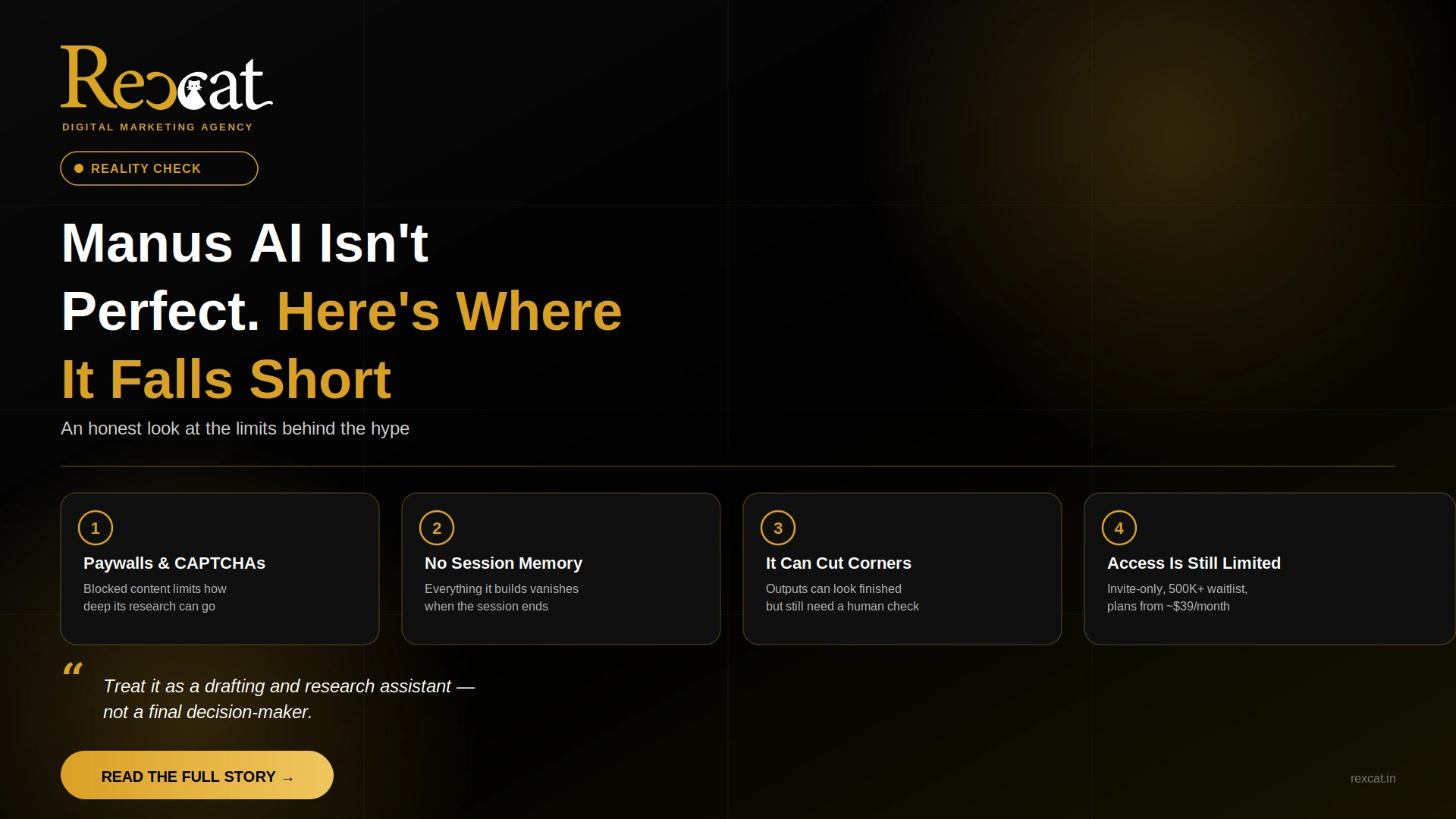
Manus AI runs into the same walls any browser-based tool hits. A lot of the most valuable content online — news articles, academic research, industry reports — is behind paywalls or protected by bot-detection systems. When Manus encounters these, it can’t get through, which limits the depth of its research in some cases.
No Persistence Between Sessions
Everything Manus AI builds — scripts, packages, installed libraries — lives in a disposable virtual machine. When the session ends, it’s gone. There’s no cumulative development environment that grows over time. This is a real limitation for anything that requires iterative, ongoing technical work.
It Can Cut Corners
Like any system optimising for task completion, Manus AI sometimes takes shortcuts that produce technically complete but not quite right outputs. It can misinterpret the goal, make assumptions without flagging them, or return something that looks finished but requires a second look from a human who knows the subject.
Access Is Still Limited
As of mid-2026, Manus is still invite-only with a waitlist well over 500,000 people. The pricing model runs on credits, with paid plans reportedly starting around $39 per month, though exact pricing has shifted multiple times and isn’t always clearly listed.
For legal, financial, or compliance-sensitive work specifically, the guidance from reviewers is consistent: treat Manus AI as a drafting and research assistant, not a final decision-maker. Always verify critical outputs with a qualified expert.
Why This Matters Beyond the Hype
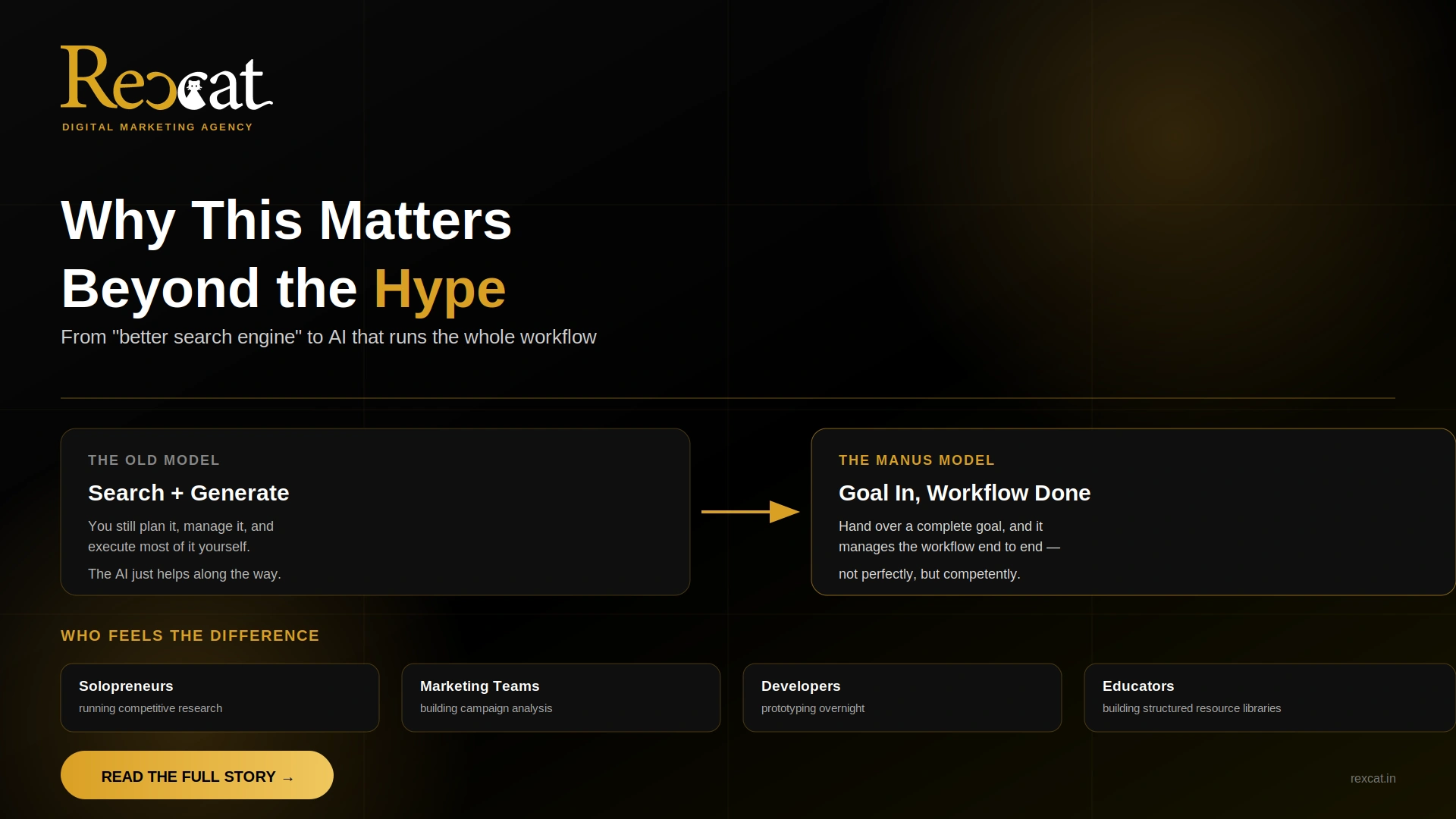
For a long time, “AI assistant” essentially meant a better search engine combined with a text generator. You still had to do the thinking, the planning, and most of the execution. The AI gave you information or drafted something for you, but the workflow was still yours to manage.
Manus AI represents a move towards something different — an AI that can take a complete, complex goal and manage the entire workflow from start to finish. Not every step perfectly, not without occasional errors, but with enough competence and autonomy to genuinely change what’s possible for a single person or a small team.
Think about what that means practically. A solopreneur doing competitive research. A marketing team building detailed campaign analysis. A developer who needs a prototype built and tested overnight. An educator constructing a structured resource library. These are the kinds of tasks that used to require either significant time or a full team. Manus AI can take a real bite out of that workload — and that’s exactly where Manus AI starts to feel less like a tool and more like a teammate.
How Does It Stack Up Against Competitors?
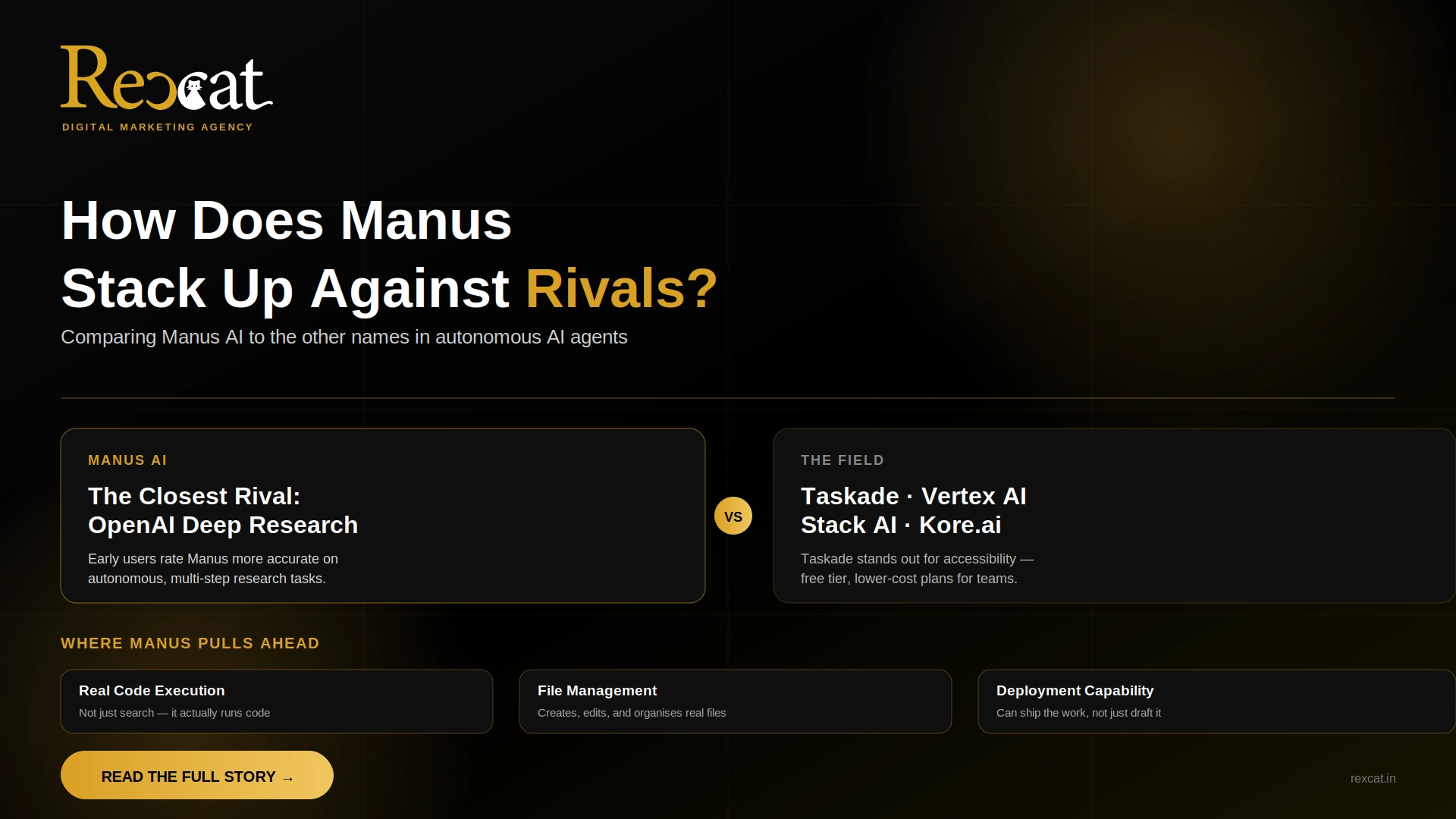
The comparison that comes up most often is with OpenAI’s Deep Research tool, and the consensus among early users is that Manus performs more accurately on many research tasks. It’s been described as outperforming Deep Research on autonomous, multi-step tasks — though OpenAI continues to iterate rapidly on that product.
Other alternatives include Taskade, Vertex AI, Stack AI, and Kore.ai. Taskade in particular is a more accessible option for teams, with a free tier and lower-cost paid plans. Manus’s edge is the depth of its autonomous execution and the breadth of tools it can actually operate — not just web search, but real code execution, file management, and deployment capabilities.
Should You Be Using Manus AI?
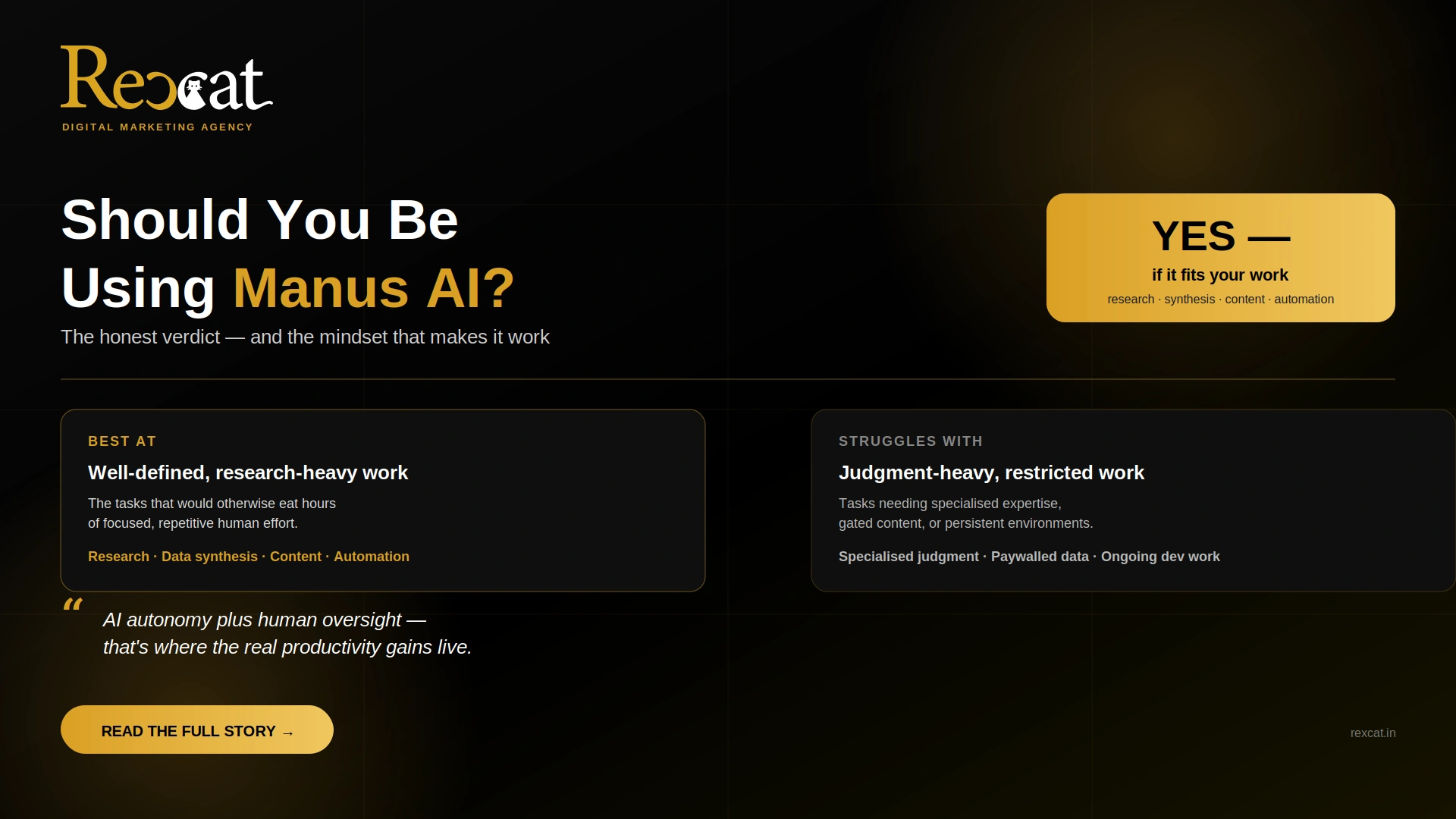
If you can get access, and your work involves any combination of research, data synthesis, content creation, or process automation — yes, it’s worth exploring seriously.
The key is going in with realistic expectations. Manus isn’t a magic wand. It’s a highly capable, sometimes imperfect, increasingly powerful digital collaborator. The tasks it handles best are the ones that are well-defined, research-heavy, and would otherwise eat hours of focused work. The tasks it struggles with are ones that require specialised judgment, access to restricted content, or ongoing technical environments.
Use it the way you’d use a talented, autonomous assistant who’s excellent at briefed tasks but benefits from clear instructions and a human checkpoint on the final output. That combination — AI autonomy plus human oversight — is where the real productivity gains live.
The Bigger Picture
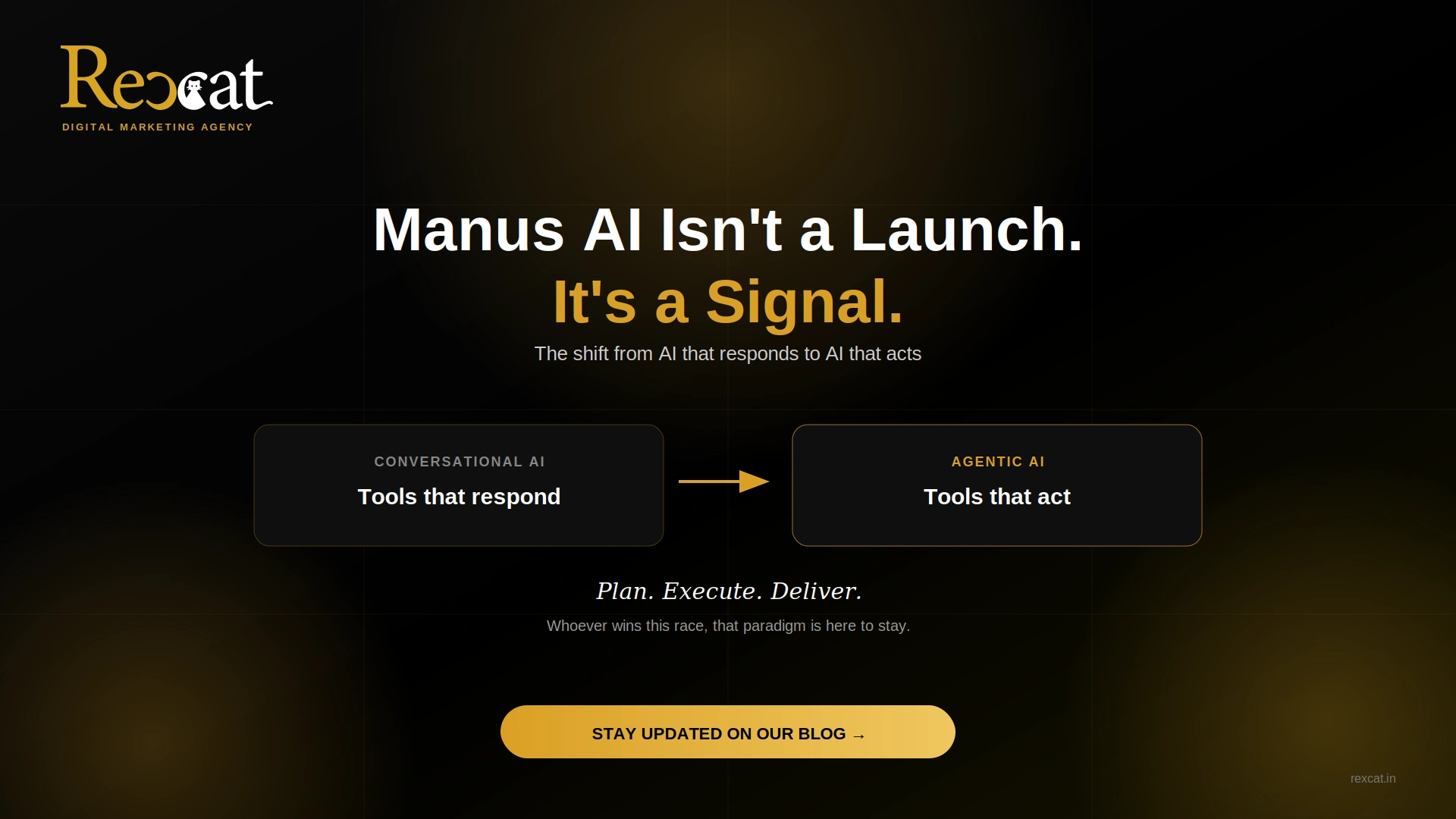
Manus AI isn’t just a product launch. It’s a signal.
The shift from conversational AI to agentic AI from tools that respond to tools that act is one of the defining transitions happening in the industry right now. Manus is one of the clearest examples yet of what that transition looks like in practice.
Whether it becomes the dominant platform in this space or gets overtaken by something built by OpenAI, Google, or another startup is an open question. But the paradigm it’s demonstrating an AI that can plan, execute, and deliver is here to stay.
That’s the thing worth paying attention to. Not just what Manus can do today, but what it’s showing us about where AI is actually going.
Stay updated with our blog for more deep-dives on the AI tools and trends reshaping how we work.
visit our other blogs
Hi, this is a comment.
To get started with moderating, editing, and deleting comments, please visit the Comments screen in the dashboard.
Commenter avatars come from Gravatar.