
Picture this: it’s 9 PM, you’re lying in bed scrolling through Instagram, and an ad for a pair of sneakers pops up — the exact pair you were eyeing on a shopping site three hours earlier. Or maybe you typed “best biryani near me” into Google and, within seconds, a list of restaurants appeared, complete with reviews, photos, and directions.
That’s digital marketing at work. It’s quietly running in the background of almost every online experience you have, and most people never stop to think about how it all comes together.
If you’ve landed here because you’re curious about what digital marketing actually is, how it works, and why every business — from your neighborhood bakery to global giants like Amazon If you’re investing in it, you’re in the right place. Let’s break it down in plain language, without the jargon overload.
So, What Exactly Is Digital Marketing?
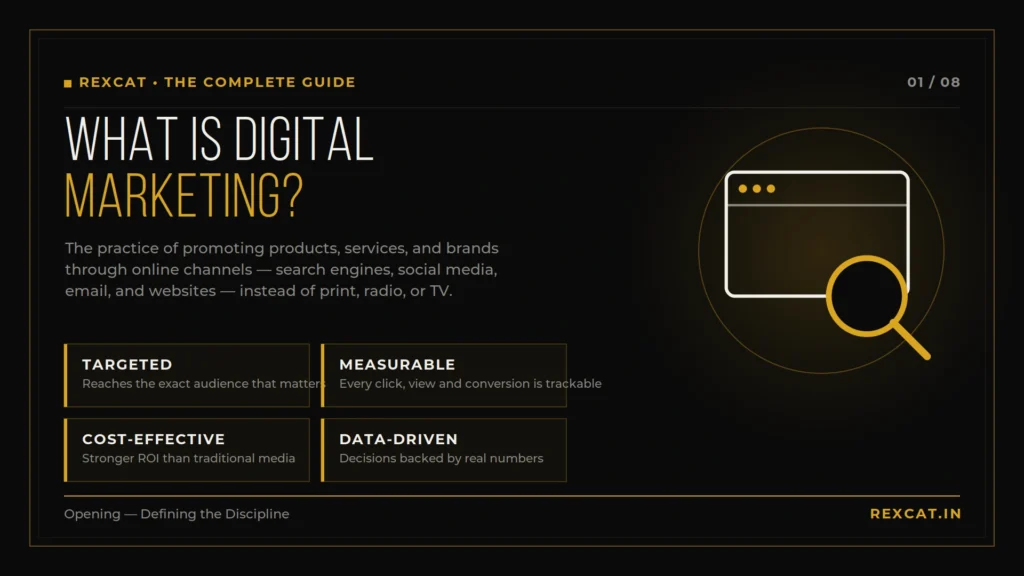
At its core, digital marketing is the practice of promoting products, services, or brands using digital channels — the internet, mobile apps, search engines, social media, email, and more. Digital marketing reaches consumers where they already spend the majority of their time—online—instead of depending exclusively on conventional techniques like TV advertisements, newspaper ads, or billboards.
Think of it as the modern evolution of advertising. Traditional marketing shouted a message to everyone within earshot, hoping some of them would listen. Digital marketing, on the other hand, is like having a conversation with the exact person who’s already interested in what you’re offering. It’s targeted, measurable, and — when done right — incredibly efficient.
The accuracy of digital marketing is what makes it so beautiful. A business can know exactly who saw their ad, how long they watched a video, whether they clicked a link, and even what device they used while doing it. That kind of visibility simply didn’t exist in the era of print ads and radio spots.
Why Digital Marketing Matters More Than Ever
A few decades ago, if you wanted to buy a washing machine, you’d walk into a store, ask the salesperson a few questions, and make a decision on the spot. Today, that same purchase involves reading reviews, comparing prices across five websites, watching a YouTube unboxing video, and maybe asking a friend on WhatsApp what they think.
This change is a change in the business behavior. These days, people are actively investigating, comparing, and making decisions based on what they find online rather than merely passively consuming content. If a business isn’t visible during that research phase, it simply doesn’t exist in the customer’s mind.
There’s also the matter of cost. Traditional advertising — a full-page newspaper ad or a 30-second TV slot — can cost a fortune with no guarantee of reaching the right audience. Digital marketing flips that equation. A small business with a modest budget can run a laser-focused campaign that reaches exactly the kind of customer they want, in the exact location they operate, at a fraction of the cost.
The Building Blocks of Digital Marketing
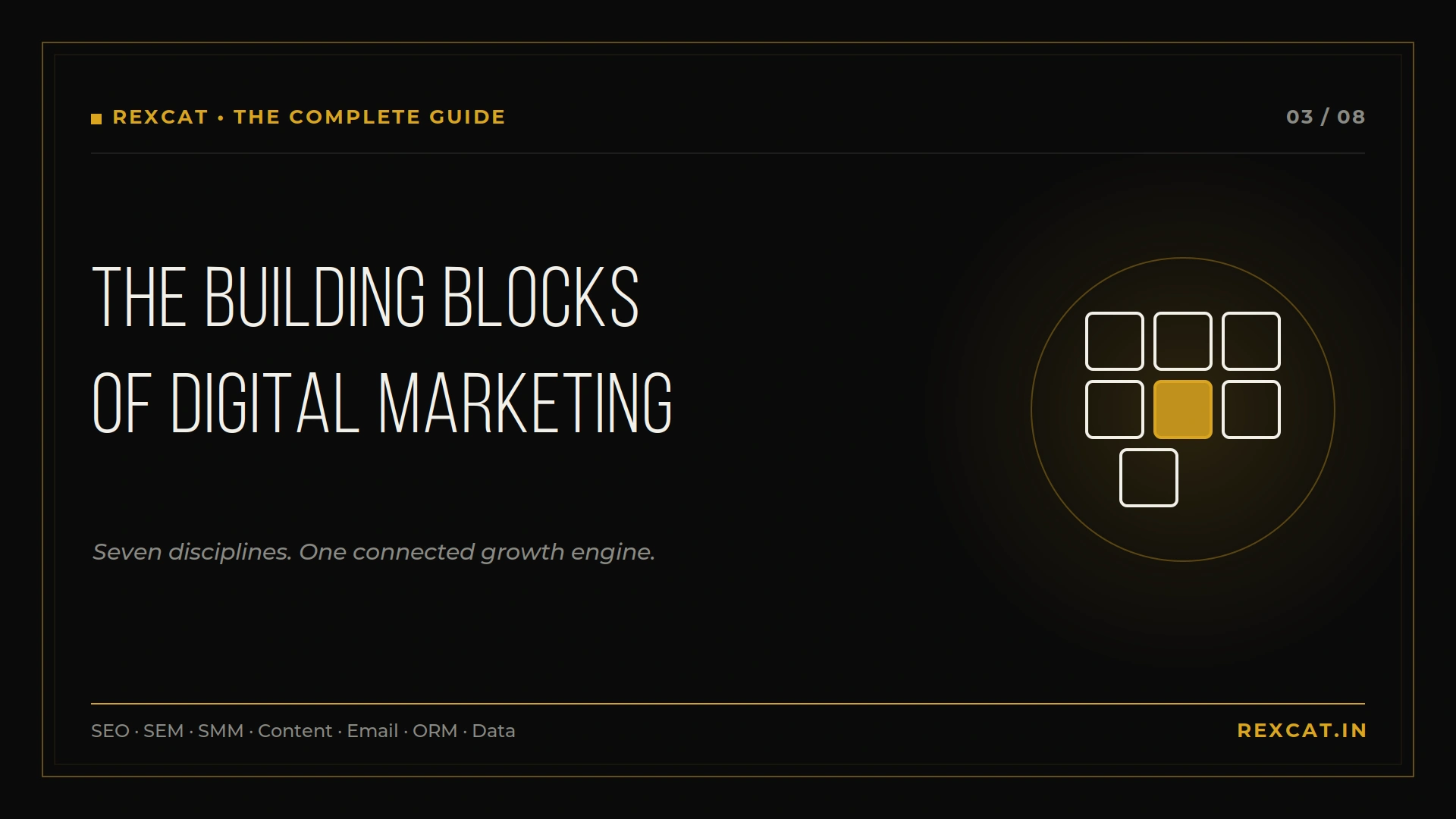
Digital marketing is an umbrella phrase that encompasses a number of related methods, each with a distinct goal, rather than a single activity. Let’s walk through the main ones.
SEO is the process of improving a website so it ranks higher in search engin
e results, like Google, without paying for ads. When you search “affordable web design services” and a company’s website shows up on the first page, that’s usually the result of solid SEO work — carefully chosen keywords, quality content, fast loading speeds, and a website structure that search engines trust.
Good SEO is a long game. It doesn’t deliver overnight results, but the traffic it brings is often more sustainable and cost-effective than paid advertising over time.
-
Search Engine Marketing (SEM)
While SEO focuses on earning your spot organically, SEM is about paying for visibility. This usually involves running pay-per-click (PPC) ads on platforms like Google Ads, where businesses bid on keywords so their listings appear at the top of search results — often marked with a small “Ad” label.
SEM is fantastic for businesses that want quick visibility while their SEO efforts build momentum in the background.
-
Social Media Marketing (SMM)
Social media isn’t just for sharing vacation photos anymore — it’s a full-blown marketing battlefield. Brands use various platforms, such as Facebook community groups, LinkedIn thought-leadership posts, and Instagram Reels, to promote their products, establish connections, and interact with their audience.
What makes social media marketing so powerful is its two-way nature. Unlike a billboard, a brand’s Instagram post can spark comments, shares, and direct messages — turning followers into a genuine community rather than just an audience.
-
Content Marketing
This is where storytelling meets strategy. Content marketing involves creating valuable, relevant material — blog posts, videos, infographics, podcasts — that attracts and retains an audience, without directly selling to them at every turn.
The concept is straightforward: if you continuously add value, trust will grow organically and eventually lead to business. A blog post that is well-written and truly helps someone find a solution to their problem builds much stronger brand loyalty than any aggressive sales message ever can.
-
Email Marketing
Despite being one of the oldest digital channels, email marketing remains one of the most effective. It allows businesses to nurture relationships directly — sending personalized offers, updates, or helpful content straight to someone’s inbox.
The reason email still works so well is ownership. Unlike social media, where algorithms decide who sees your content, an email list is a direct line to people who’ve already shown interest in your brand.
-
Online Reputation Management (ORM)
In the digital age, a brand’s reputation is often built — or destroyed — in the comments section. ORM involves actively monitoring and managing how a business is perceived online, responding to reviews, addressing complaints, and encouraging happy customers to share their experiences.
A single bad review left unanswered can shape how hundreds of potential customers see a brand. ORM ensures the narrative stays fair and accurate.
-
Data Analytics
Perhaps the most underrated piece of the puzzle, data analytics is what ties everything together. It’s the process of collecting and interpreting data — website traffic, ad performance, customer behavior — to understand what’s working and what isn’t.
Without analytics, digital marketing is just guesswork. With it, every decision becomes informed by real evidence rather than assumptions.
How Digital Marketing Actually Works in Practice
Let’s say a small clothing brand wants to grow its online presence. Here’s roughly how the pieces might come together:
They start by identifying their target audience — say, young professionals aged 22 to 35 who care about sustainable fashion. From there, they build a website optimized for search engines so people looking for “eco-friendly clothing brands” can find them organically.
While waiting for SEO to gain traction, they run targeted Google and Instagram ads to drive immediate traffic. On social media, they post behind-the-scenes content, customer testimonials, and styling tips to build a genuine following rather than just chasing likes.
Every new visitor who shows interest gets added to an email list, where they receive personalized offers and updates. Meanwhile, the brand keeps an eye on reviews across platforms, responding promptly to both praise and criticism.
Behind all of this, analytics tools track which ads convert best, which blog posts drive the most traffic, and which social media posts spark the most engagement — allowing the brand to refine its strategy continuously.
This is digital marketing in action: not a single tactic, but a coordinated ecosystem where each piece supports the others.
Digital Marketing vs. Traditional Marketing
It’s worth pausing here to appreciate just how different digital marketing is from its traditional counterpart.
Traditional marketing is largely one-directional — a company sends a message, and the audience receives it, with little room for interaction or immediate feedback. Digital marketing, by contrast, thrives on interaction. Comments, shares, click-through rates, and direct messages create a constant feedback loop that traditional media never offered.
Then there’s measurability. A billboard might get thousands of eyes on it daily, but there’s no reliable way to know how many of those people actually acted on it. Digital marketing removes that uncertainty. Every click, every view, every conversion can be tracked, analyzed, and improved upon.
That said, digital marketing hasn’t made traditional marketing obsolete — it’s simply changed the balance. Many successful campaigns today blend both worlds, using traditional media for broad brand awareness and digital channels for targeted, measurable action.
Common Misconceptions About Digital Marketing
There’s a persistent myth that digital marketing is just “posting on social media” or “running a few Facebook ads.” In reality, it’s a much deeper discipline that involves strategy, psychology, data interpretation, and continuous testing.
Another misconception is that digital marketing delivers instant results. While paid ads can bring quick traffic, sustainable growth — through SEO, content, and community building — takes time, consistency, and patience. Businesses that expect overnight success often abandon strategies just before they start paying off.
There’s also a belief that digital marketing is only for big companies with big budgets. In truth, one of its greatest strengths is accessibility. A local bakery with a well-optimized Google Business listing and an active Instagram page can compete for attention just as effectively as a national chain, often at a much lower cost.
Why Businesses Can’t Afford to Ignore It Anymore
Consumer attention has permanently shifted online, and it’s not shifting back. Whether someone is searching for a nearby restaurant, comparing insurance plans, or looking for gift ideas, their journey almost always begins with a screen.
Businesses that fail to establish a strong digital presence risk becoming invisible to an entire generation of customers who simply don’t look elsewhere. On the flip side, those who invest thoughtfully in digital marketing — building genuine value rather than chasing quick wins — tend to build stronger, longer-lasting relationships with their customers.
Final Thoughts
Digital marketing isn’t a buzzword or a passing trend — it’s the modern language of business communication. It’s how brands introduce themselves, build trust, solve problems, and ultimately turn strangers into loyal customers, all through the screens we carry in our pockets every day.
Whether it’s a well-crafted blog post that answers a nagging question, a perfectly timed email offer, or an ad that seems to read your mind, digital marketing is the invisible thread connecting businesses to the people who need them. And as technology keeps evolving, one thing remains constant: the businesses that understand and adapt to this digital language will always have the upper hand over those that don’t.
If there’s one takeaway here, it’s this — digital marketing isn’t about shouting the loudest. It’s about being in the correct place, at the appropriate moment, with the suitable message. And once a business gets that right, growth tends to follow naturally.
visit for more blogs