If you’ve ever sat in a business meeting and heard someone say, “We should just put up a hoarding,” while someone else insists, “No, we need to run Instagram ads,” you’ve witnessed the age-old tug of war between Digital Marketing vs Traditional Marketing. It’s a debate that refuses to die down, mostly because both sides have a point.
The Digital Marketing vs Traditional Marketing debate has become even more relevant as businesses try to balance offline brand-building with online customer acquisition. Traditional marketing built empires. Digital marketing is rebuilding them differently. And business owners, especially small and mid-sized ones, are stuck in the middle wondering where to put their next rupee, dollar, or hour of effort.
This isn’t going to be one of those articles that tells you digital marketing has “killed” traditional marketing. That’s lazy thinking. The truth is messier, more interesting, and honestly more useful for anyone trying to grow a brand right now. By the end of this Digital Marketing vs Traditional Marketing guide, you’ll understand the strengths, weaknesses, and ideal use cases of both approaches so you can make smarter marketing decisions. Let’s get into it properly.
What We Actually Mean by “Traditional Marketing”
Traditional marketing is the stuff that existed long before the internet decided to take over our lives. Think newspaper ads, television commercials, radio jingles, billboards, pamphlets stuffed into your mailbox, and that guy handing out flyers outside the mall. When discussing Digital Marketing vs Traditional Marketing, these classic advertising channels represent the foundation of traditional marketing.
It’s marketing that speaks to everyone in a given area at once, without knowing exactly who’s listening. Whether you’re a truck driver who is running late for a delivery, a retired teacher, or a teenager, a billboard on a highway doesn’t care. Everyone who drives past sees the same message.
This “one message, everyone sees it” approach was the only real option for decades. Brands built loyalty through repetition and mass visibility. You saw the same toothpaste ad on TV fifty times a month, and eventually, without even realizing it, that brand became the one you reached for at the store. Understanding this broad-reach strategy is essential when comparing Digital Marketing vs Traditional Marketing, as it highlights why traditional advertising remains effective for building widespread brand awareness.
What We Mean by “Digital Marketing”
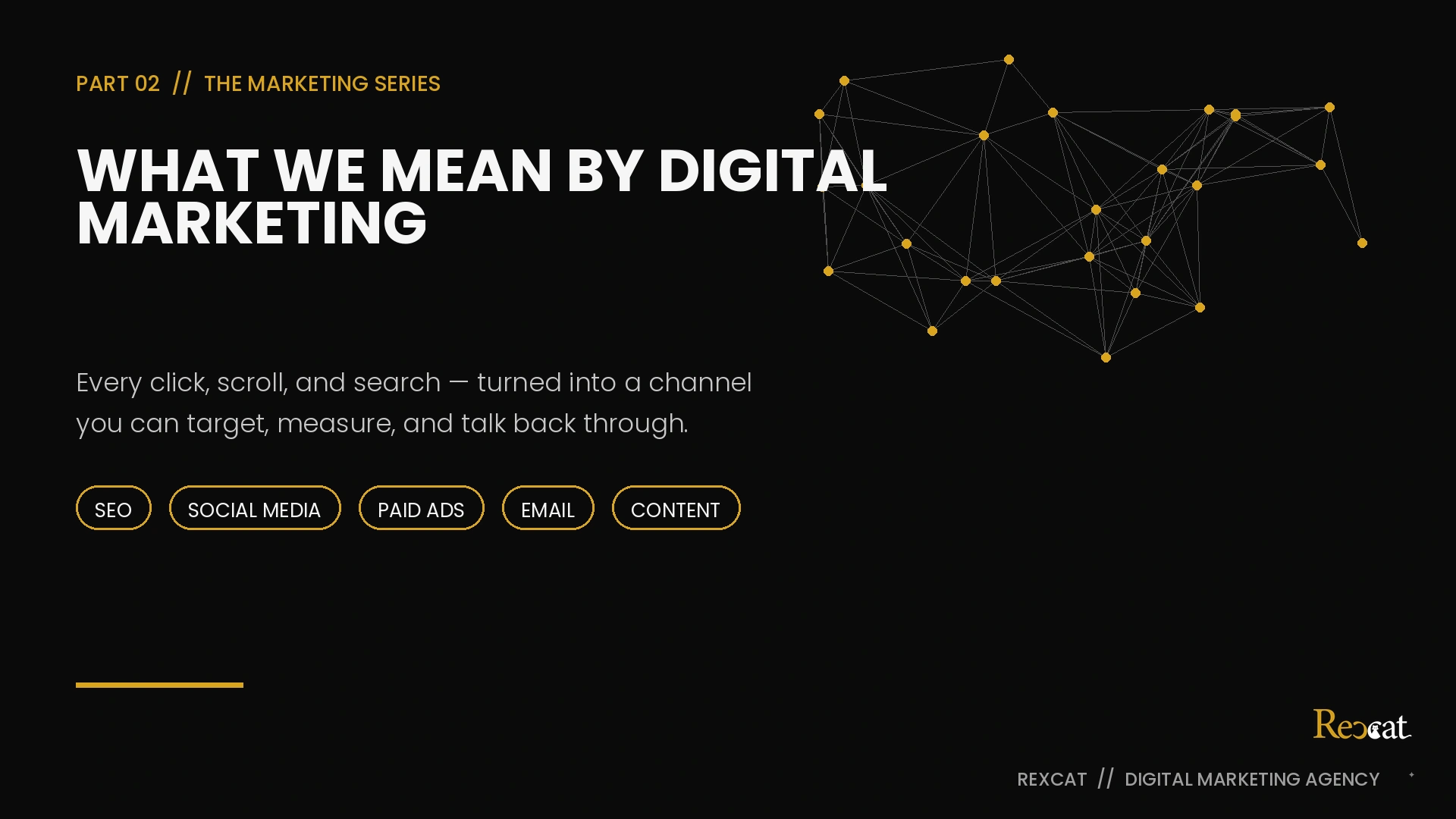
Digital marketing is everything that happens on screens connected to the internet. SEO, social media marketing, email campaigns, Google Ads, influencer partnerships, content marketing, YouTube videos, WhatsApp broadcasts—all of it falls under this umbrella. In the Digital Marketing vs Traditional Marketing comparison, digital marketing stands out for its ability to reach highly specific audiences and deliver measurable results.
The core difference isn’t just “where” the marketing happens. It’s “how” it happens. Digital marketing can be targeted down to a frighteningly specific level. You can show an ad only to women aged 25 to 34, living in Kochi, who recently searched for skincare products and follow three specific beauty influencers. Consider using a newspaper ad for that.
Digital marketing also allows two-way conversation. A customer can comment, ask a question, complain, or praise your brand publicly, and you can respond in real time. Traditional marketing never had that kind of back-and-forth. It was always a monologue, never a dialogue. This interactive communication is one of the biggest advantages in the Digital Marketing vs Traditional Marketing debate, helping businesses build stronger customer relationships and respond quickly to audience feedback.
The Cost Factor: Where Your Money Actually Goes Further
Let’s talk money, because that’s usually what tips the scale for most business owners.
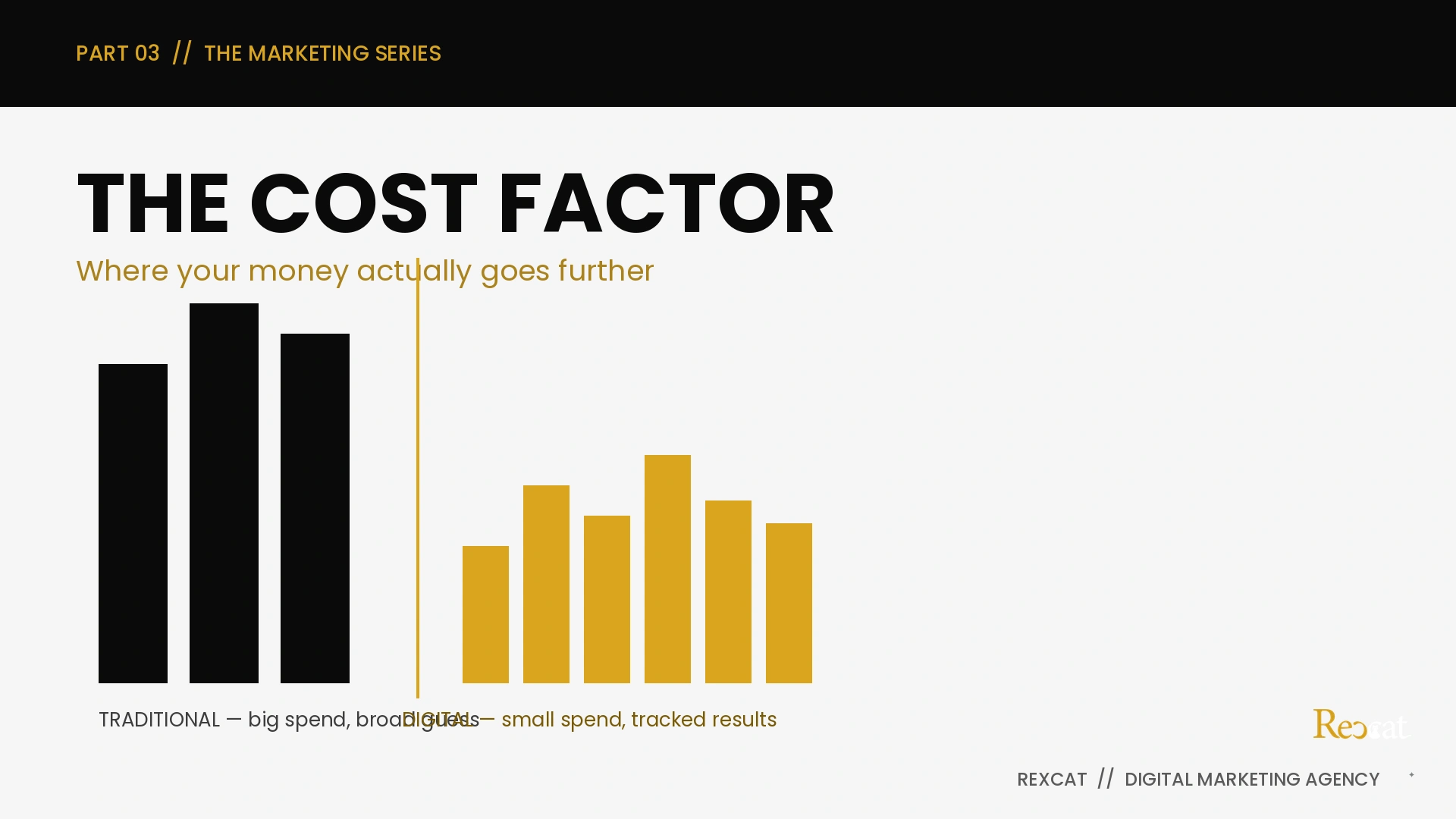
When comparing Digital Marketing vs Traditional Marketing, cost is often one of the biggest deciding factors. Traditional marketing tends to demand a heavier upfront investment. Printing a batch of brochures, booking airtime on a local TV channel, or renting billboard space for a month isn’t cheap, and there’s no guarantee of who actually sees or responds to it. You’re paying for exposure, not necessarily for results.
Digital marketing, on the other hand, lets you start with almost nothing. A small business can run a targeted Facebook ad campaign for a few hundred rupees a day and actually track how many people clicked, called, or messaged because of it. That level of accountability simply didn’t exist in the traditional world.
This doesn’t mean digital marketing is always cheaper in the long run. SEO takes months of consistent effort before it pays off. Paid ads can quietly drain a budget if nobody’s watching the numbers closely. But the flexibility to start small, test, and scale only what works is a massive advantage that traditional marketing structurally cannot offer. In the Digital Marketing vs Traditional Marketing debate, this flexibility makes digital marketing especially attractive for startups, small businesses, and brands looking to maximize their return on investment.
Measuring Success: Guesswork vs Actual Data
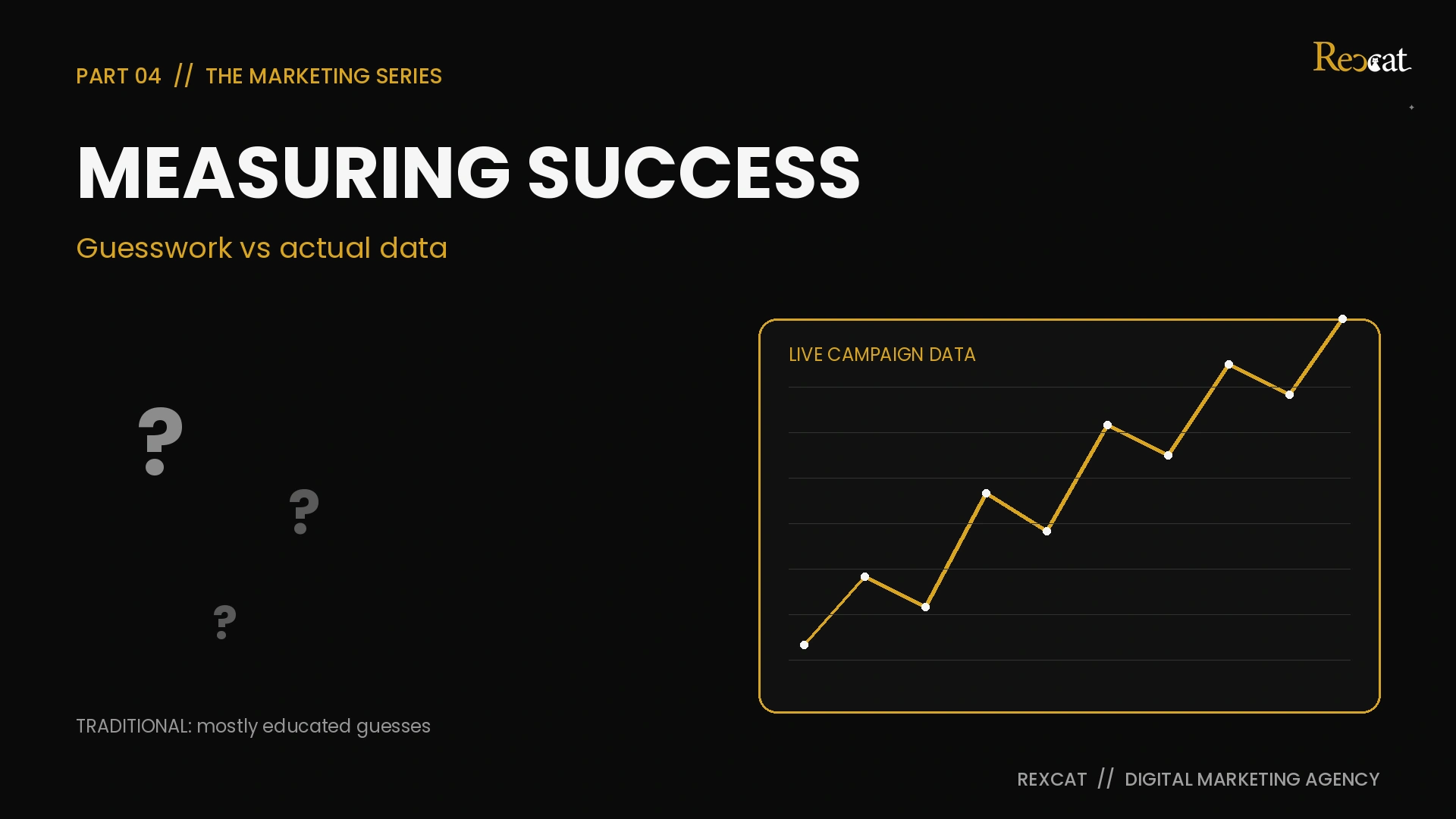
When comparing Digital Marketing vs Traditional Marketing, measuring success is one of the biggest differences. With traditional marketing, measuring success has always been a bit like reading tea leaves. Did that radio ad increase your sales? Maybe. Was it the billboard, or was it just a good month? Nobody can say for certain. Brands relied on broad indicators like overall sales trends, brand recall surveys, or simply “gut feeling.”
Digital marketing gives you a dashboard full of numbers. You know exactly how many people saw your ad, how many clicked, how many left without doing anything, and how many actually bought something. You can see which headline performed better, which image got more engagement, and which time of day brought in the most conversions.
This doesn’t make digital marketing perfect. Numbers can be misread, vanity metrics can trick people into thinking they’re doing well when they’re not, and data overload is a real problem. But at least there’s something concrete to work with instead of pure speculation. The Digital Marketing vs Traditional Marketing debate often highlights this measurable advantage, making digital channels a preferred choice for businesses that rely on data-driven decision-making and continuous campaign optimization.
Reach: Wide Net vs Precise Net
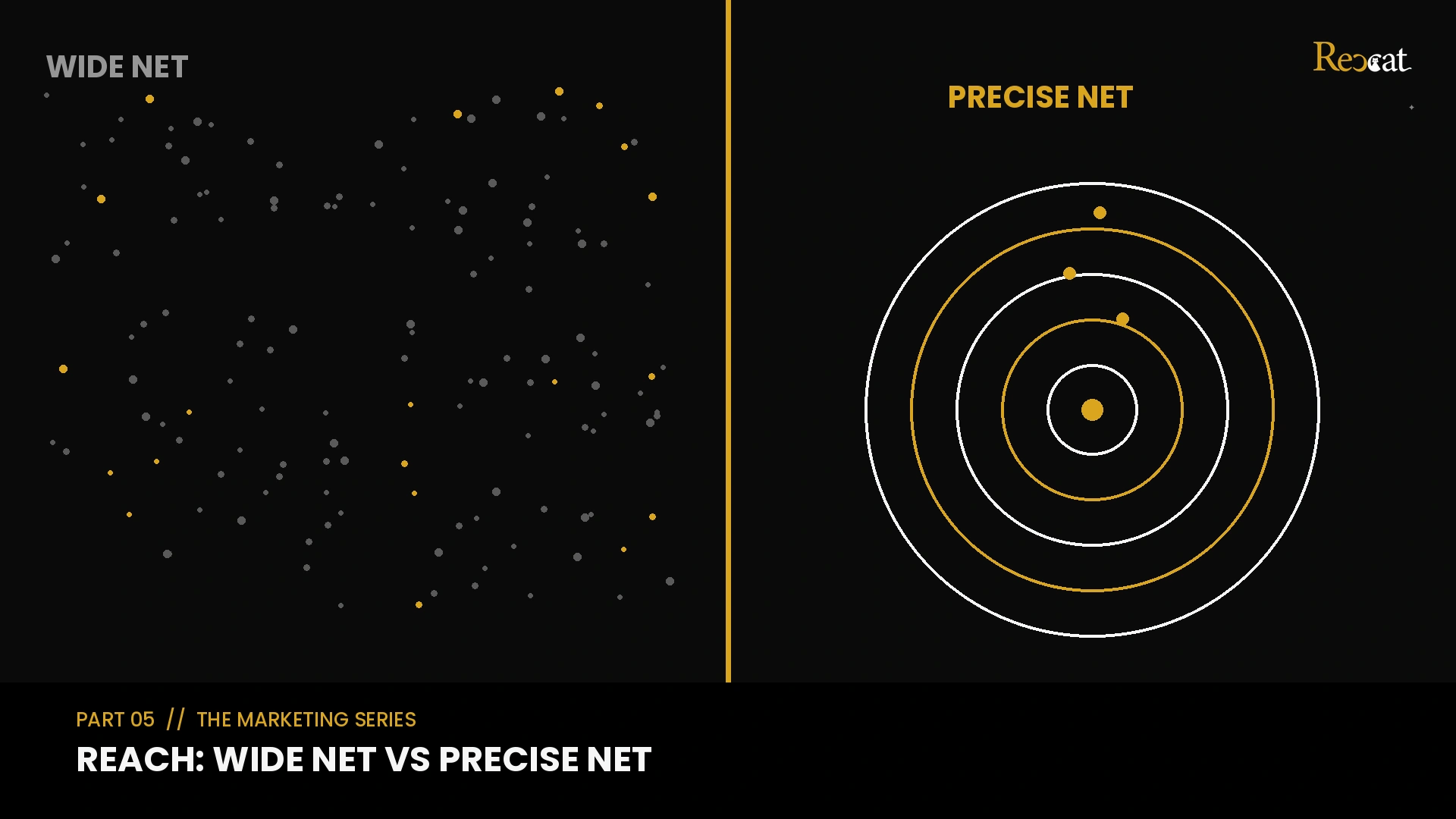
Traditional marketing casts an incredibly wide net. In the Digital Marketing vs Traditional Marketing comparison, a TV ad during a popular show or a full-page newspaper ad can reach hundreds of thousands, sometimes millions, of people in one shot. That kind of mass exposure still has value, especially for brands trying to build broad awareness or trust quickly, like a new hospital opening in a city or a political campaign trying to reach every household.
Digital marketing, by contrast, is about precision over volume. Instead of reaching a million random people, you reach ten thousand people who are far more likely to actually care about what you’re selling. It’s less flashy, but it’s often more efficient because you’re not paying to shout at people who will never buy from you anyway.
There is a place for both approaches depending on what a business is trying to achieve. A brand-new soft drink launching nationally might still lean into TV and outdoor advertising because they need everyone to at least recognize the name. A local bakery trying to fill orders for next weekend has zero need for that kind of mass reach—a well-targeted Instagram ad to people within five kilometers will do far more for them. Ultimately, the Digital Marketing vs Traditional Marketing debate comes down to choosing the right strategy for your goals, audience, and budget rather than treating one approach as universally better than the other.
Trust and Credibility: An Interesting Twist
People don’t discuss this topic enough. When comparing Digital Marketing vs Traditional Marketing, traditional marketing may be more conventional and less “trendy,” but many people still consider it more credible. Seeing your business in a local newspaper or hearing it mentioned on the radio can make it feel more “official” or “established” to certain generations and communities.
Digital marketing, especially social media advertising, sometimes struggles with a trust problem. People have grown skeptical of ads that follow them around the internet. Fake reviews, exaggerated claims, and oversaturated influencer promotions have made audiences more guarded than they used to be.
That said, digital marketing has its own trust-building tools that traditional marketing simply doesn’t have. Genuine customer reviews, user-generated content, behind-the-scenes videos, and transparent replies to public comments can build a kind of relatable trust that a polished thirty-second TV commercial never could. In the Digital Marketing vs Traditional Marketing debate, businesses that combine the credibility of traditional media with the authenticity and transparency of digital channels are often the most successful at earning long-term customer trust.
Speed and Flexibility
Imagine a business realizes their current ad campaign isn’t working. In the traditional world, that’s a problem. The newspaper ad is already printed. The billboard is already up for the month. The TV slot is booked. There isn’t much opportunity to shift direction in the middle without losing money.
Digital marketing allows you to pause, tweak, or completely kill a non-performing campaign within minutes. You can test five different headlines in a single day and keep only the one that performs best. A campaign can be started in the morning, and by the evening, you will have actual engagement data.
This kind of agility is one of digital marketing’s biggest structural advantages, especially for small and medium businesses who cannot afford to waste money on something that clearly isn’t working.
Longevity and Staying Power
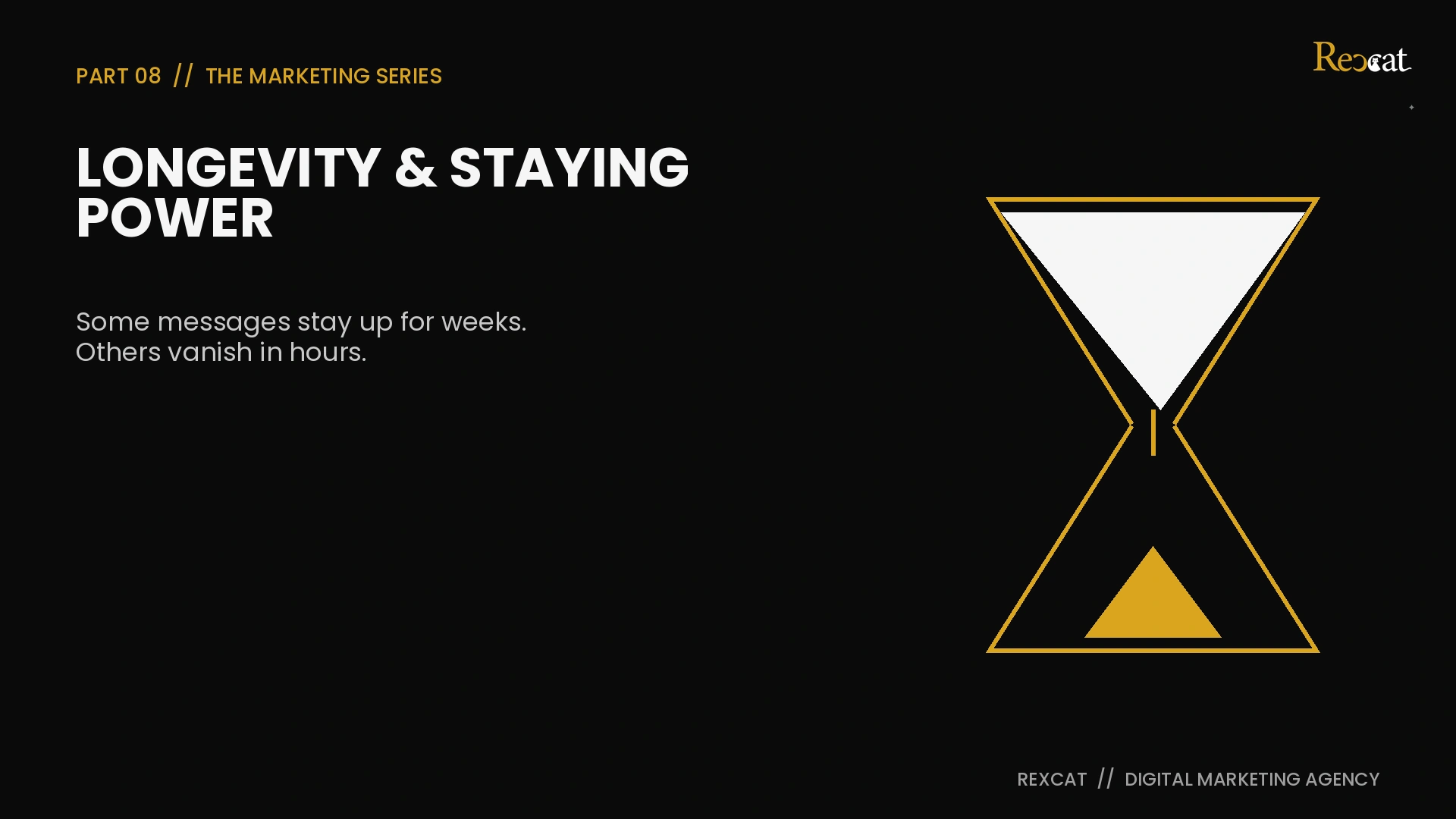
This is a benefit of traditional marketing that is frequently overlooked. In the Digital Marketing vs Traditional Marketing comparison, a billboard message stays up for weeks without needing constant babysitting. A well-placed ad in a respected magazine can be seen repeatedly by the same reader over days or weeks. There’s a certain “always there” quality to physical advertising.
Digital content, especially on social media, has a relatively short shelf life. A social media post might get noticed for a few hours before it disappears into the endless scroll, buried under newer content. This means digital marketing demands constant, ongoing effort. You can’t just “set it and forget it” the way you sometimes can with a physical ad campaign.
This is exactly why content strategy and consistency matter so much in the digital space. One good post isn’t enough. To keep a brand visible in someone’s feed, a continual flow of material must be generated on a regular basis. When evaluating Digital Marketing vs Traditional Marketing, this difference in content lifespan is one of the biggest factors businesses should consider before choosing their marketing strategy.
So, Which One Should You Actually Choose?
This is the wrong question to be asking in 2026.
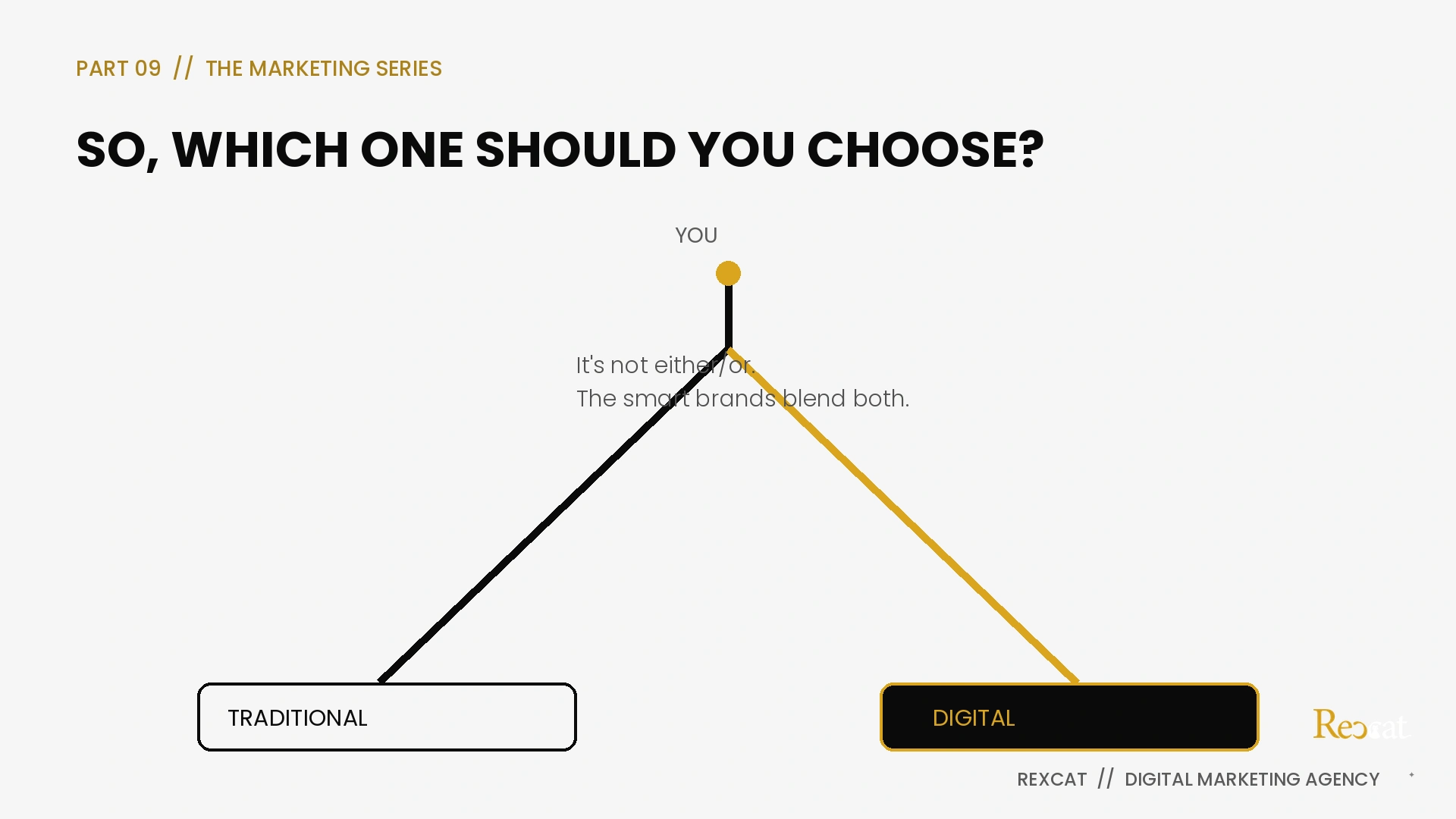
The businesses winning right now aren’t the ones picking a side. They’re the ones blending both intelligently based on their specific goals, audience, and budget. The Digital Marketing vs Traditional Marketing debate often overlooks the fact that successful brands use both channels together. A real estate company might still put up hoardings in a growing neighborhood while simultaneously running geo-targeted Facebook ads to people searching for property in that same area. A restaurant might get featured in a local newspaper review while also working with food bloggers on Instagram.
The smartest approach isn’t simply Digital Marketing vs Traditional Marketing. It’s understanding what each does best and letting them support each other.
Traditional marketing still wins when:
- You need broad, immediate awareness across an entire city or region.
- Your target market is more likely to be older or less tech-savvy.
- You’re building long-term brand trust in a local community.
- Your budget allows for it, and the goal is visibility rather than immediate conversion.
Digital marketing still wins when:
- You need measurable results and clear ROI.
- Your budget is limited and needs to be spent efficiently.
- You wish to establish a direct line of communication with your audience.
- You’re targeting a specific age group, location, or interest niche.
- Speed and flexibility to adapt campaigns matter.
Ultimately, Digital Marketing vs Traditional Marketing isn’t about declaring one as the winner. It’s about choosing the right mix of strategies to achieve your business goals and connect with the right audience at the right time.
The Bigger Picture
Marketing has never really been about choosing the “better” method. It’s about choosing the right method for the right moment, the right audience, and the right goal. The debate around Digital Marketing vs Traditional Marketing often focuses on which approach is superior, but the real answer depends on your business objectives. Traditional marketing built the foundation of brand advertising as we know it, and it still holds real power in specific situations. Digital marketing gave businesses precision, data, and speed that were unimaginable a couple of decades ago.
The brands that thrive today are rarely purists. They mix billboards with retargeting ads. They mix YouTube pre-rolls with radio jingles. They print brochures and simultaneously run WhatsApp campaigns. When comparing Digital Marketing vs Traditional Marketing, the most successful businesses don’t choose one over the other—they combine both strategically. It’s not about loyalty to one method over the other—it’s about understanding your audience deeply enough to know exactly where they’re paying attention, and showing up there with a message that actually matters to them.
At the end of the day, marketing was never really about billboards or banners, TV spots or TikTok trends. It’s about being seen, being remembered, and being trusted by the right people at the right time. Ultimately, the Digital Marketing vs Traditional Marketing discussion isn’t about finding a single winner. Whether that happens through a printed page or a pixel on a screen is simply a detail—an important one, but still just a detail in a much bigger story about connecting with people who might actually need what you’re offering.
visit for more blogs